

In 1976, six young colleagues working at the calculator division of Delhi Cloth Mills (DCM) decided to leave their corporate jobs to pioneer indigenous computing in India. The six original co-founders were:
- Shiv Nadar
- Ajai Chowdhry
- Arjun Malhotra
- Subhash Arora
- Yogesh Vaidya
- D.S. Puri
Pooling together approximately ₹1.87 lakh from personal savings and asset sales, they began operating out of a rooftop barsati in Delhi under the venture name Microcomp. To bypass strict license-raj regulations for computer manufacturing, they partnered with the Uttar Pradesh Electronics Corporation (UPTRON) to form Hindustan Computers Limited (HCL) in 1976. HCL went on to build India’s first indigenous microcomputers, competing successfully in a market newly vacated by IBM.
How Ownership Consolidated with Shiv Nadar
While HCL started as a collaborative partnership, the ownership structure consolidated over time through a mix of strategic restructuring, founder exits, and holding-company reinvestment:
1. The Anchor Role of Shiv Nadar
From the company’s inception, Shiv Nadar acted as the primary driver, chief strategist, and largest equity holder among the founders. While the co-founders shared functional leadership across sales, hardware design, and operations, Nadar maintained executive control and led corporate expansion.
2. Divergence of the Co-Founders
Over the 1980s and 1990s, the original co-founders gradually pursued different career paths, personal ventures, and retirement:
- Arjun Malhotra relocated abroad to run global ventures, eventually co-founding TechSpan (later Headstrong) and selling his HCL equity.
- Ajai Chowdhry stayed on to run HCL Infosystems (the hardware and domestic distribution business) rather than the global software export wing, eventually retiring to mentor startups and advise government technology panels.
- Subhash Arora, Yogesh Vaidya, and D.S. Puri exited their operational roles and monetized their stakes across various stages of company maturation.
3. The Software Pivot and HCL Tech Spin-Off (1991–1999)
In 1991, recognizing that global software services offered higher margins and scalability than domestic computer hardware, HCL carved out HCL Technologies to focus on offshore R&D and IT outsourcing.
When HCL Technologies went public in 1999, the equity was structured predominantly under HCL Corporation and investment vehicles like Vama Sundari Investments, which were controlled by Shiv Nadar and his family. As other founders cashed out or focused on the legacy hardware entity (HCL Infosystems), Nadar consistently reinvested capital into the IT services arm.
Current Ownership Structure
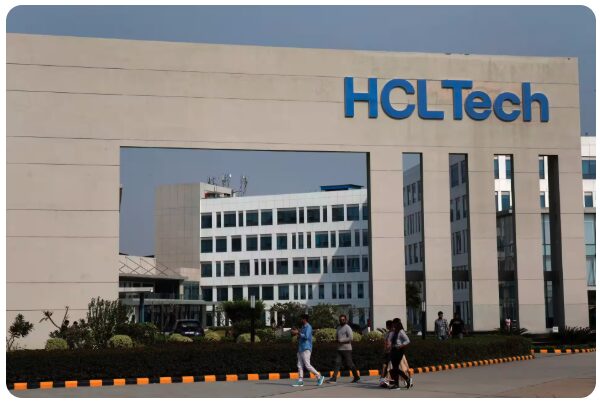
Today, HCLTech (NSE: HCLTECH) is among India’s top four IT services exporters. The promoter group retains a controlling majority stake of approximately 60.8%. In recent years, Shiv Nadar transitioned the operational chairmanship and transferred majority voting and holding rights to his daughter, Roshni Nadar Malhotra, ensuring the family maintains long-term controlling governance.
